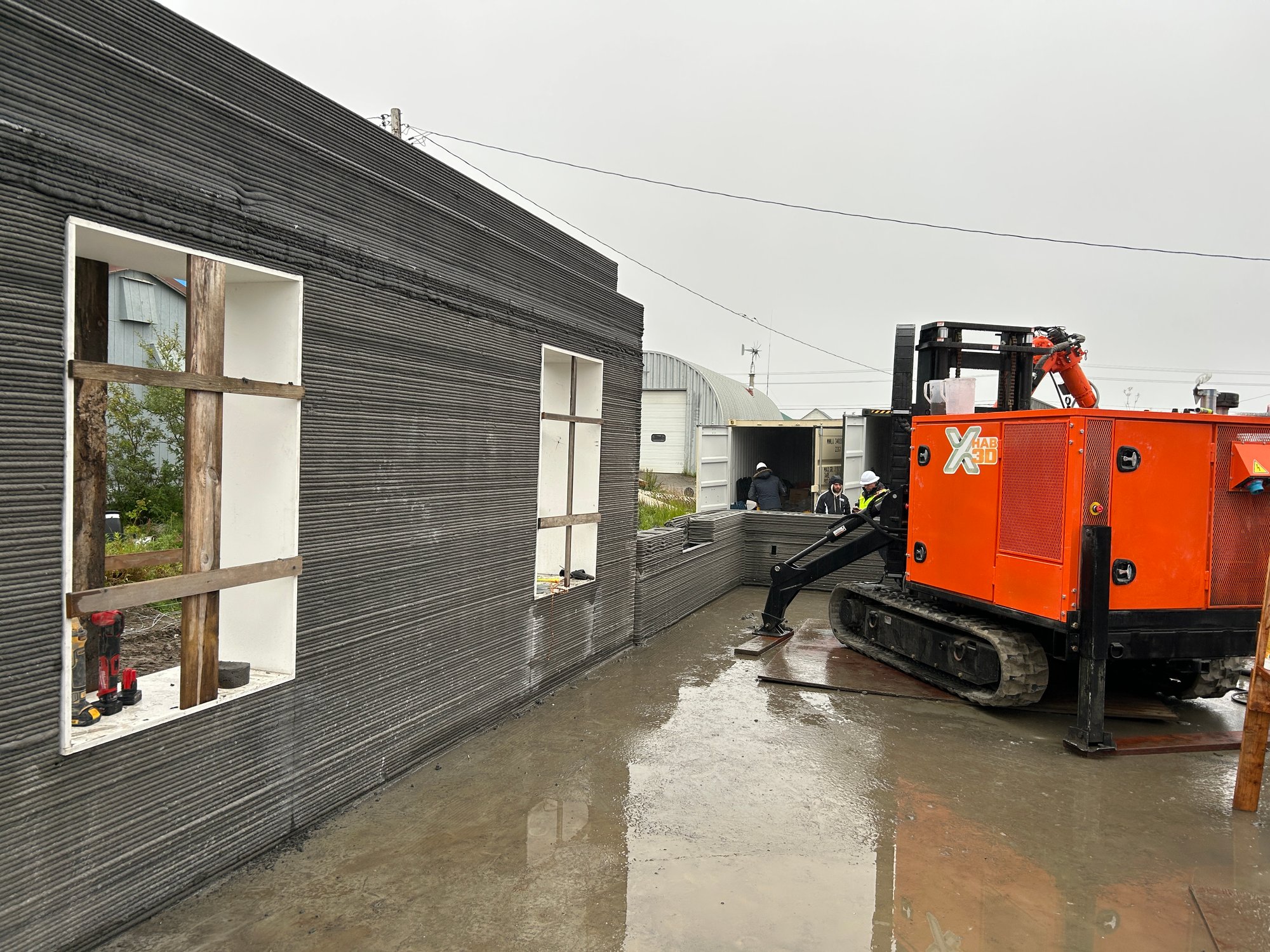
The First Sub-Arctic 3D-Printed Home Demonstration in North America
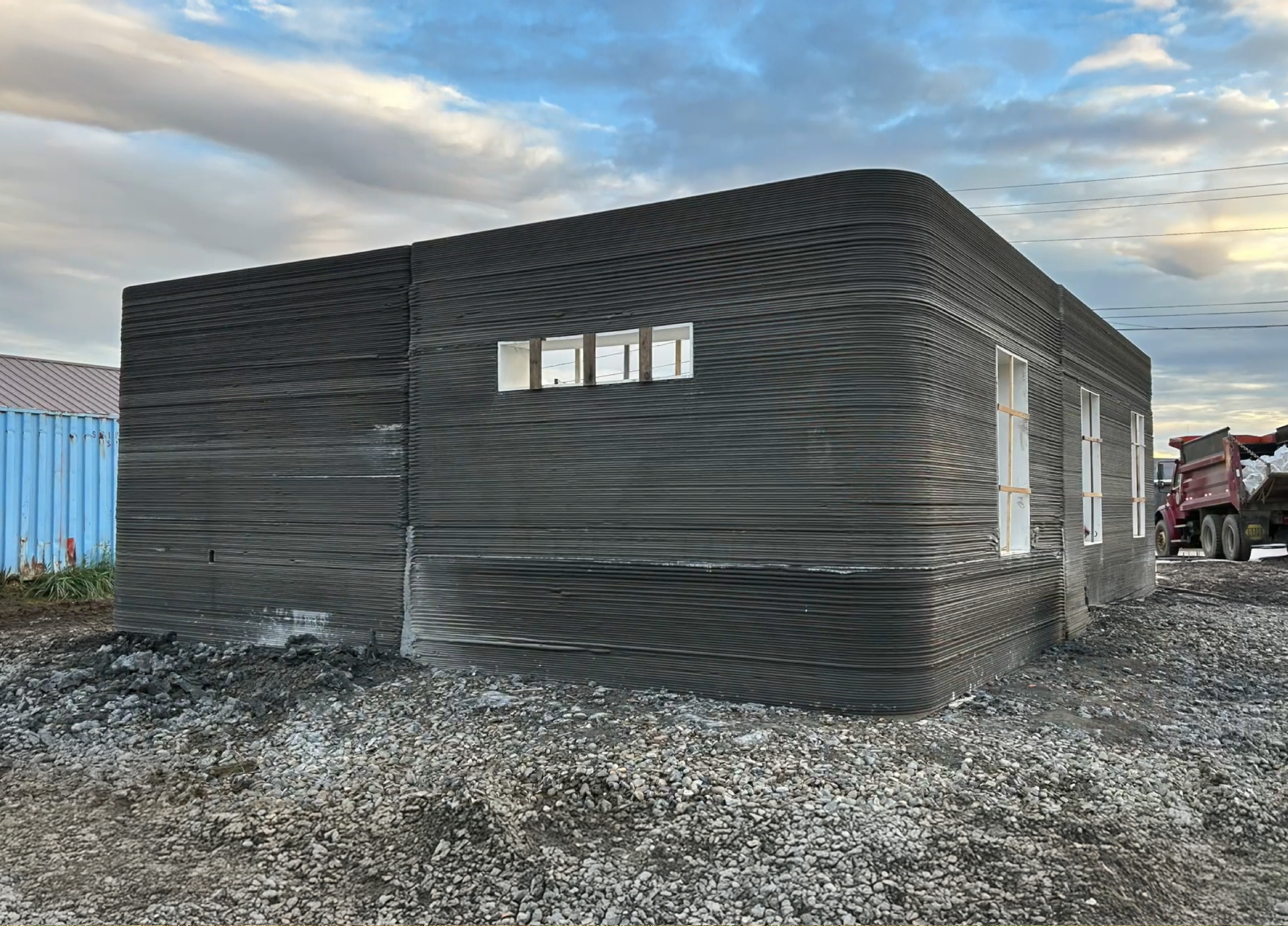
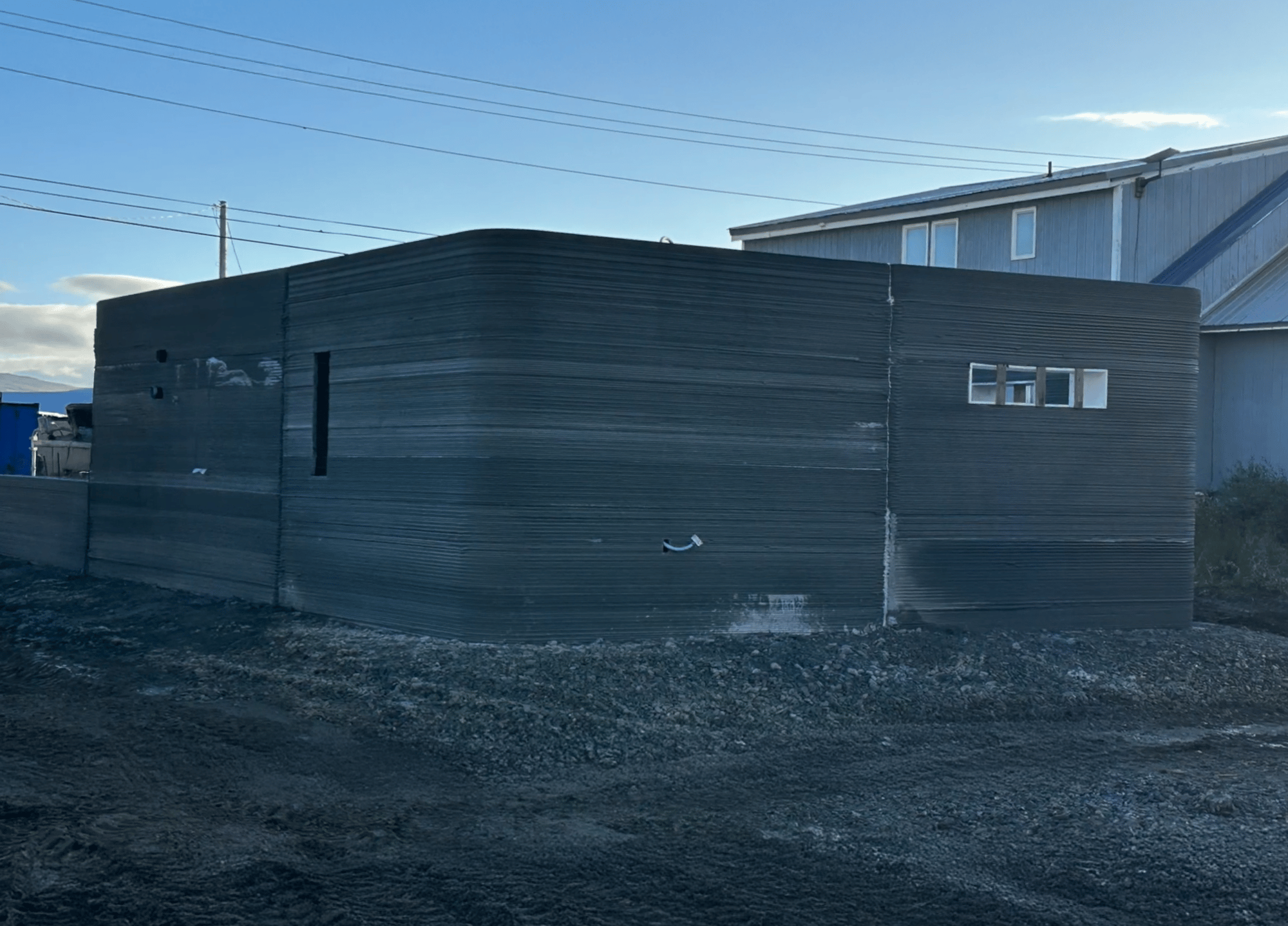
This project was the first ever completed under true sub-arctic field conditions in the Americas. It involved printing a 1,500-sq-ft home in Nome, Alaska, on the outskirts of the Arctic Circle using the MX3DP mobile system configured for extreme cold. This proved that X-Hab 3D’s mobile, self-powered robotic-arm 3D concrete printing system can operate in one of the harshest construction environments in North America while validating remote logistics, cold-weather materials, and extreme-climate build workflows.
Project Details
- Location: Nome, Alaska
- Structure Size: 25′ × 61′ × 10′ (≈ 1,500 sq ft footprint)
- Printer Used: X-Hab 3D MX3DP Mobile System (Arctic-configured)
- Material Sources & Mix Strategy: Combination of locally sourced Alaskan aggregates (dark mix) blended and sacked in Alaska, demonstrating economic viability, and Sika USA 3DCP mix (light mix), demonstrating X-Hab 3D’s ability to use different mixes.
ABOUT THE BUILD
The Nome project was set up to show how a mobile, self-powered 3D concrete printer performs in sub-arctic field conditions. The team had to work within the limits of short construction seasons, high winds, moisture, and rapid temperature changes. This demonstration also addressed the region’s housing needs and the challenges of building in a place with tight logistics and high material costs.
The project is expected to provide data on how the printed structure handles freeze–thaw cycles, snow loads, wind, and seismic activity, along with information on thermal performance and moisture behavior through a full winter cycle.
ON-SITE PRINTING
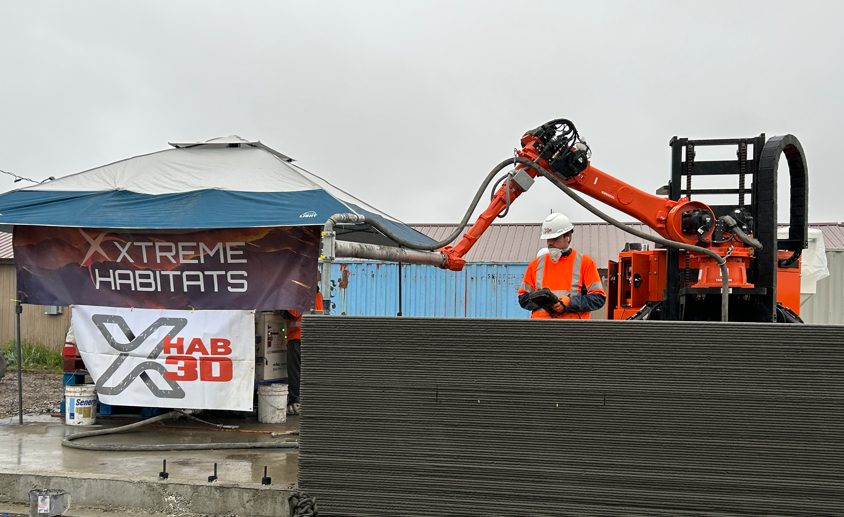
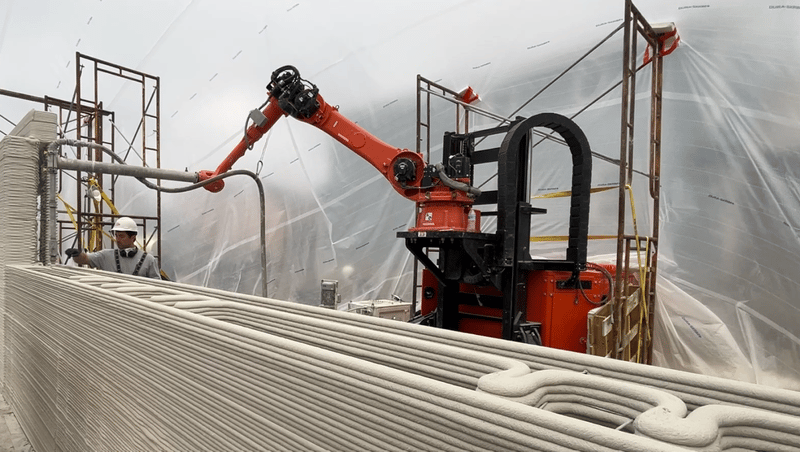
The conditions in Nome required steady adjustments as the work moved along. Cold temperatures, high humidity, and intermittent rain meant the mix had to be checked often to keep it within the right range for printing. Wind gusts reached up to 45 mph, so the crew set up 14′ scaffolding and wrapped it in reinforced plastic to create an enclosed print area. An Arctic Blast heater was used inside the enclosure to help maintain a stable temperature around the printer.
Remote logistics also shaped the workflow. Material transport was limited by weight restrictions and local availability, so the team used a combination of locally blended Alaskan aggregates and the Sika USA 3DCP mix. The short seasonal window and incoming storm cycles influenced when printing could happen, and the sequence of wall sections was adjusted based on the weather.
WHY IT MATTERS
The Nome project provided real operating data for 3D concrete printing in sub-arctic conditions. The team was able to run both locally blended Alaskan aggregates and the Sika USA 3DCP mix, giving a clear comparison of how each material behaved in cold, wet, and windy weather. The printed walls held consistent geometry and bonding throughout the build, even with rapid shifts in temperature and moisture.
The work also generated information that will support cold-climate modeling, including how the printed envelope handles freeze–thaw cycles, snow loads, high winds, and temperature swings. For regions with limited supply chains or short construction seasons, the mix strategy and logistics used here offer a reference point for future remote-site projects.
PARTNERSHIP HIGHLIGHTS
This project was completed with support from:
-
Xtreme Habitats Institute (Program Lead)
-
X-Hab 3D
-
Central Builders Supply, Meckley’s, and Happy Valley Blending
Project sponsors:
The City of Nome, HUD (PD&R), the Denali Commission, the Rasmuson Foundation, and the Alaska Housing Finance Corporation provided funding and support that enabled this large-scale sub-arctic construction demonstration.